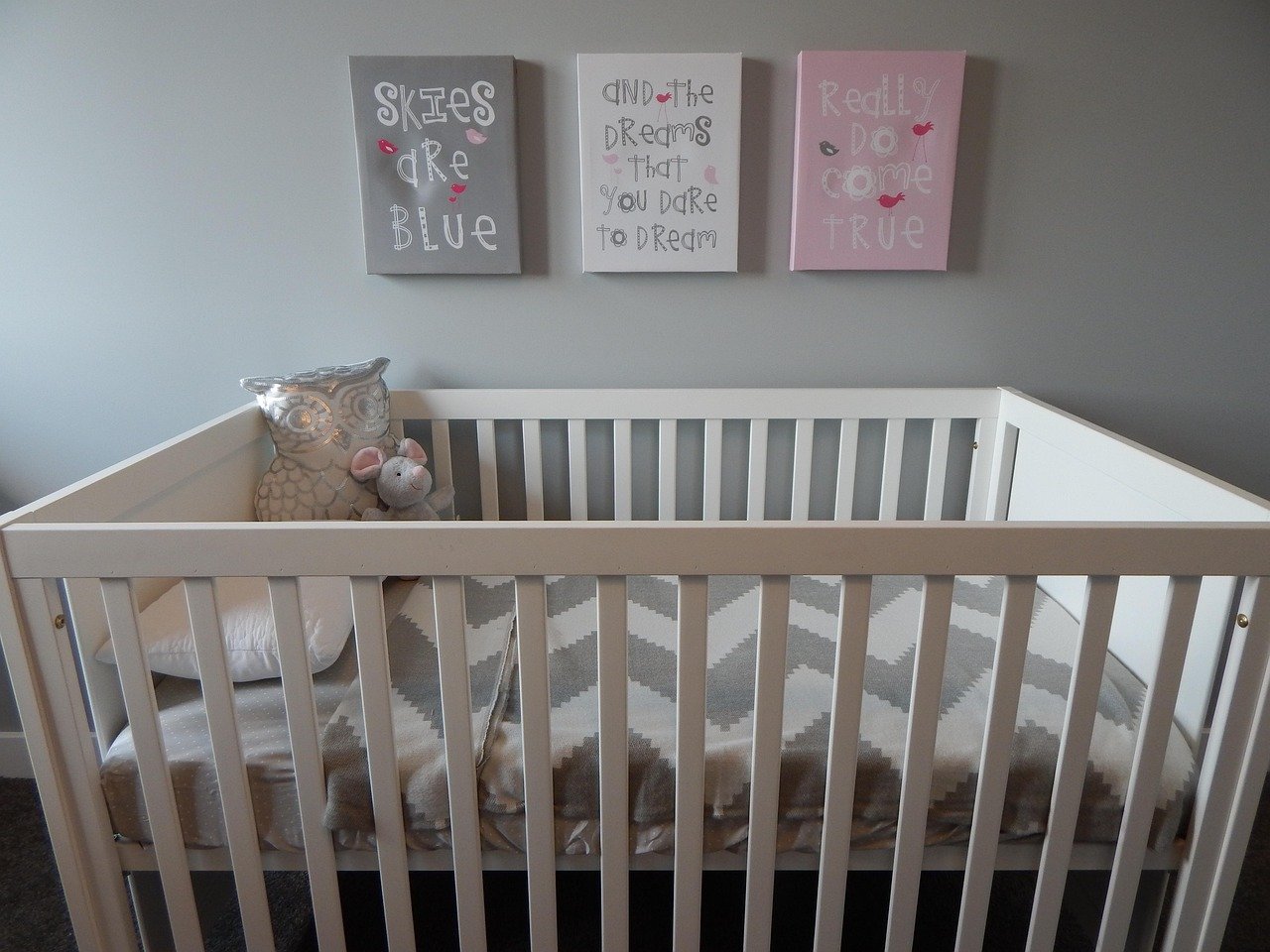
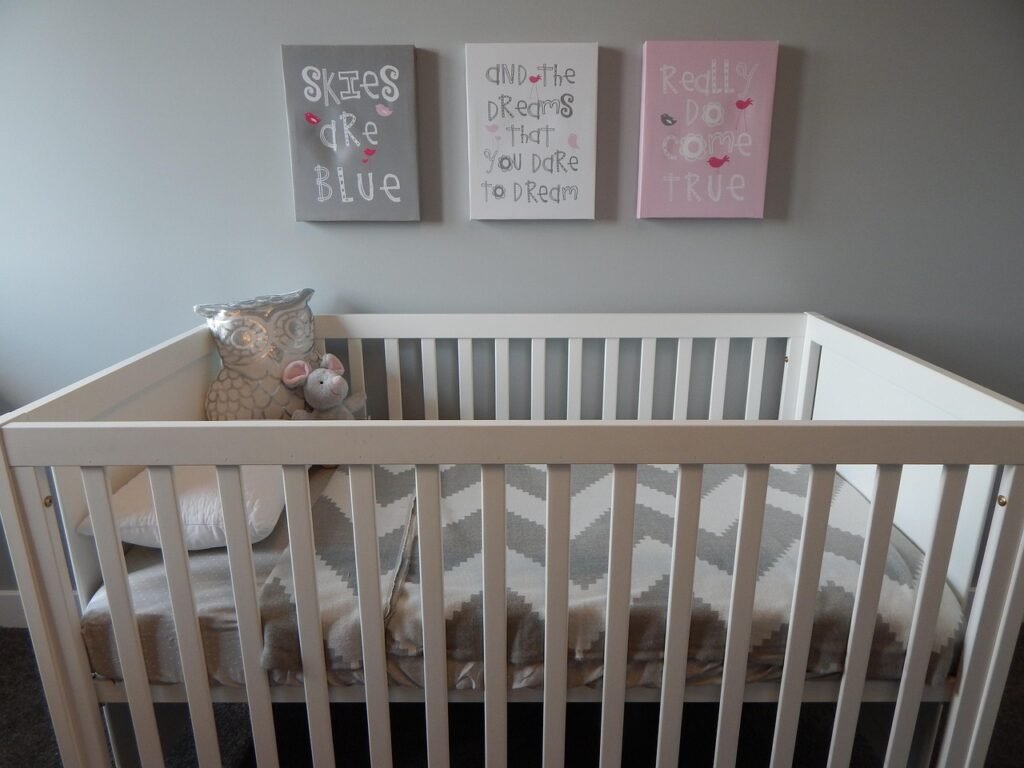
Quick answer: a safe, comfortable nursery starts with a firm, bare sleep space, furniture anchored to the wall, a calm temperature and light you can control. Add soft touches such as warm lighting and a comfy chair for feeding, but keep the crib itself plain.
Educational information only. Check current safety standards and recalls in your country.
Choose a safe crib or bassinet
- Use a product that meets current safety standards, and follow assembly instructions exactly.
- Use only the mattress made for it, with a fitted sheet.
- Keep the crib bare: no pillows, bumpers, loose blankets or soft toys, as recommended by the American Academy of Pediatrics.
- Place it away from windows, blind cords, heaters and wall decorations within reach.
Anchor furniture and secure the room
- Anchor dressers, bookcases and TVs to the wall.
- Cover unused outlets and keep cords out of reach.
- Use cordless window coverings, or secure cords out of reach.
- Keep small objects, medicines and cleaning products out of the room.
Set a comfortable temperature and light
Dress your baby in light layers, and avoid overheating. A room that is comfortable for a lightly dressed adult is usually a good guide, but check your pediatrician’s advice. Blackout curtains and a soft nightlight help with night feeds and daytime naps.
Create a comfortable feeding spot
A supportive chair, a small side table, a lamp with a dimmer and a basket with burp cloths and water make long feeds easier. Add a footstool if it helps your posture.
Choose colors and decor
| Style | Colors | Ideas |
|---|---|---|
| Soft neutral | Cream, sand, sage | Woven baskets, linen curtains |
| Gentle pastel | Blush pink, soft green | Framed art, a rug in a pale tone |
| Storybook | Blue, yellow, warm white | Picture books on a ledge |
Hang art high on the wall, or use stickers instead of heavy frames.
Small-space tips
- Use vertical storage, such as wall shelves and hanging organizers, but keep them out of the crib area.
- Choose furniture with more than one use, such as a dresser topped with a changing pad.
- Keep the floor clear for a play mat later.
Wash and air the room
Wash fabrics before use, open windows when you can, and let new furniture air out. Choose low-odor products when possible.
Nursery checklist
- Safe crib or bassinet, bare and firm.
- Furniture anchored, cords secured.
- Comfortable temperature and soft lighting.
- Feeding chair and basket ready.
- Diaper station within reach.
- Decor that is simple and out of baby’s reach.
Safe sleep, step by step
Pediatric guidance can be summed up simply: alone, on the back, in a crib or bassinet. In practice:
- Place your baby on their back for every sleep, including naps.
- Use a firm, flat mattress with a fitted sheet, and nothing else in the sleep space.
- Keep the baby’s face uncovered, and avoid hats indoors while sleeping.
- Share your room, but not your bed, for at least the first months.
- Never fall asleep with your baby on a sofa or armchair.
Swaddling and sleep sacks
Some babies settle better when swaddled. If you swaddle, use a thin breathable fabric, keep the hips loose enough to move, and always lay baby on their back. Stop swaddling as soon as your baby shows signs of trying to roll over. A wearable blanket or sleep sack is a safer alternative for many families.
Safe baby room temperature and air quality
- Many health services suggest keeping the room at about 16 to 20°C (61 to 68°F).
- Use a room thermometer, and check your baby’s chest or back of neck for overheating.
- If you paint the room, use low-odor paint and finish well before the baby arrives, leaving the windows open for a few days.
- Avoid strong scents, smoke and aerosols in the room.
Monitors and night lights
A baby monitor is optional. If you use one, keep cords out of reach, and follow the maker’s instructions for placement. A dim, warm night light helps with night feeds, and it should not be placed within reach of the crib.
A nursery safety audit
| Check | Done? |
|---|---|
| Crib or bassinet meets current standards, no recalls | |
| Firm mattress and fitted sheet only | |
| Furniture anchored to the wall | |
| Cords and blind strings out of reach | |
| Outlets covered or blocked | |
| Smoke and carbon monoxide alarm nearby | |
| Nothing hanging above the crib |
Budget tips
- Spend on the safe sleep space and car seat first.
- Borrow or buy second-hand for chairs, shelves and decor, after checking for safety.
- Use paint and fabric to change the mood, instead of buying new furniture.
- Choose a convertible crib or a dresser that can be reused later.
Choosing safe furniture
- Look for a stable base, with no sharp edges.
- Choose a changing table or pad with a safety strap, and never leave the baby alone on it.
- Avoid furniture with small detachable parts.
- Check for recalls on any second-hand item.
Window and cord safety
Window cords are a known strangulation risk for young children. Use cordless blinds or keep cords out of reach with safety devices. Do not place the crib or other furniture near windows where children can reach cords or climb. Install window guards on upper floors, where appropriate.
Electrical and heating safety
- Cover unused outlets, and keep cords behind furniture.
- Keep space heaters, humidifiers and fans out of reach.
- If you use a humidifier, clean it as directed, and place it where baby cannot reach it.
- Check smoke and carbon monoxide alarms regularly.
Diaper-changing safety
- Gather everything within arm’s reach before you start.
- Keep one hand on your baby at all times.
- Use the safety strap, if the table has one.
- Keep creams and wipes out of the baby’s reach.
Planning for the future
As your baby grows, they will roll, crawl and pull themselves up. Plan to lower the crib mattress when they can sit, and remove items from the crib that could be used to climb. Review the room regularly, and update your safety checks as your child develops new skills.
Cleaning the nursery
Dust surfaces, wash fabrics and vacuum regularly. Use mild cleaning products, and avoid strong sprays near the baby. Wash crib sheets weekly, or sooner if soiled. Open the window each day to air the room, if the weather allows.
Frequently asked questions
Does the baby need their own room right away?
No. Health guidance recommends sharing a room, but not a bed, in the early months.
Are crib bumpers safe?
The American Academy of Pediatrics advises against bumper pads in the crib.
What is a good color for a nursery?
Any color you find calming. Soft tones are popular, but there is no rule.
Conclusion
A nursery does not have to be large or expensive. Put safety first, make feeding comfortable, and add the decor you love.
Leave a Reply