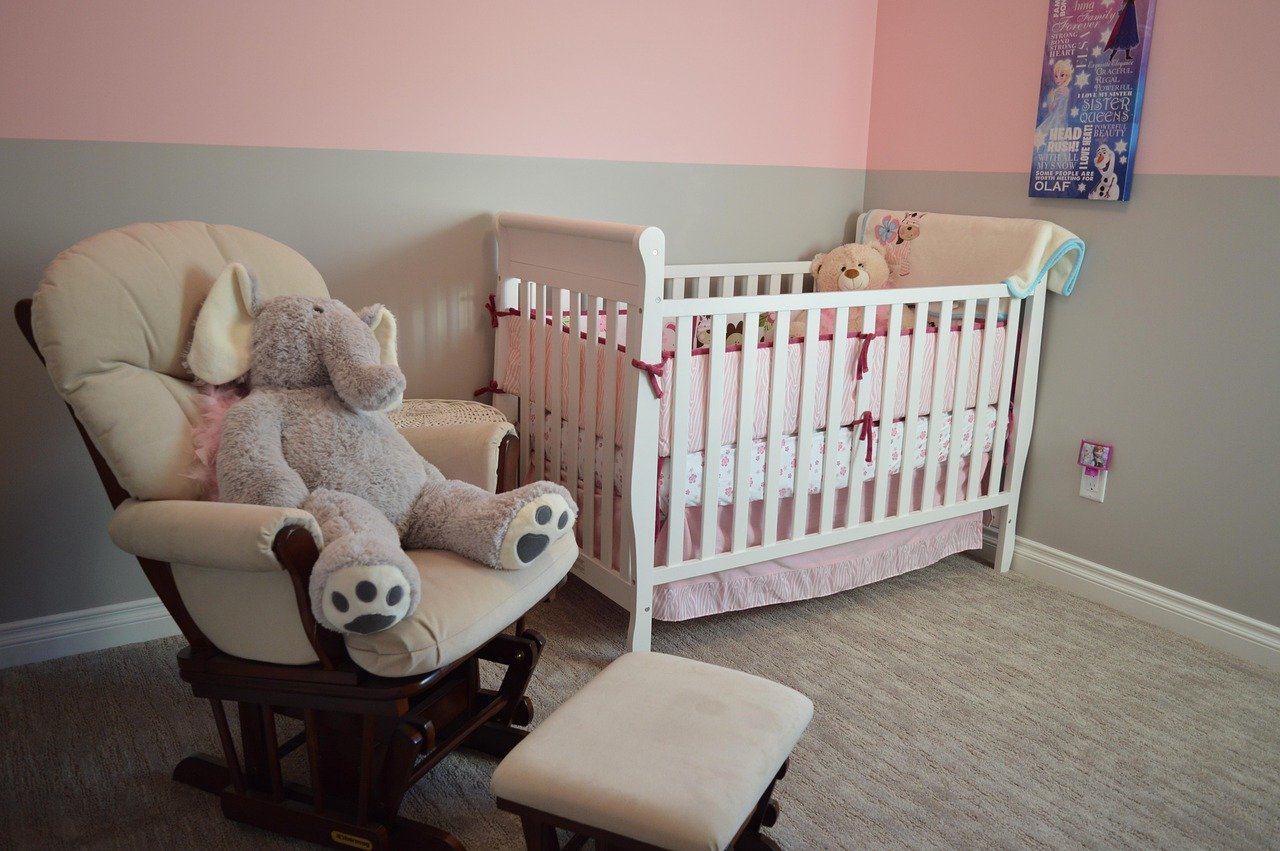

Quick answer: to get your house ready for a new baby, set up a safe sleep space, check smoke and carbon monoxide alarms, lower your water heater temperature, plan where baby will be changed and fed, stock the essentials, and prepare simple meals and support for the first weeks. You do not need a perfect nursery. You need a safe, practical one.
Educational information only. Medical review: pending.
Start with a safe sleep space
The American Academy of Pediatrics (HealthyChildren.org) recommends that babies sleep alone, on their back, on a firm, flat surface made for infants, such as a crib, bassinet or play yard that meets current safety standards. Keep the sleep space bare: no pillows, loose blankets, bumper pads or soft toys. Sharing a room with your baby, without sharing a bed, is recommended for at least the first months.
- Use the mattress that came with the crib and a fitted sheet only.
- Do not use second-hand cribs with missing parts or recalls. Check the model number against official recall lists in your country.
- Keep cords, blind strings and wall decorations out of reach.
Check the basic safety systems
- Smoke and carbon monoxide alarms: test them and replace batteries. Place one on every floor and near sleeping areas.
- Water heater: many safety organizations advise setting it to no more than 120°F (49°C) to reduce scald risk.
- Emergency numbers: save your pediatrician, poison control and local emergency numbers on the fridge and in your phone.
- Car seat: buy a seat suited to newborns, read the manual, and have the installation checked if your area offers it. Many hospitals will not let you leave without one.
Create three small “stations”
Instead of decorating a whole room first, think about the three things you will do dozens of times a day.
| Station | What it needs | Tip |
|---|---|---|
| Changing | Diapers, wipes, barrier cream, change of clothes, a washable pad | Keep a second mini station on each floor |
| Feeding | Comfortable chair, nursing pillow if you like, water, snacks, burp cloths, bottles if needed | Add a good light and a phone charger |
| Sleeping | Safe crib or bassinet, dim light, sound machine (optional) | Keep it uncluttered and away from windows and cords |
Baby-proof what matters now
Newborns do not move around, but small steps now save work later.
- Anchor tall furniture and TVs to the wall.
- Store medicines and cleaning products out of reach and, where possible, locked.
- Remove or secure heavy objects on high shelves.
- Keep pets safely supervised around the baby.
Wash, sort and stock
Wash new clothes, blankets and sheets before use with a gentle detergent, especially if anyone in the family has sensitive skin. Do not overbuy newborn sizes, because babies grow quickly. Stock diapers in two sizes, wipes, a thermometer, nail clippers or file, and basic first aid items. Ask your pediatrician for a list of any extras they recommend.
Prepare your own support system
- Cook and freeze a few simple meals, or set up a meal-sharing plan with friends.
- Stock easy snacks and drinks you can eat one-handed.
- Decide who can help with chores, siblings and pets in the first two weeks.
- Write down your pediatrician’s contact details and your hospital route.
Home preparation checklist
- Safe crib or bassinet set up, bare and firm.
- Smoke and CO alarms tested.
- Water heater at a safe temperature.
- Car seat installed and checked.
- Changing, feeding and sleeping stations ready.
- Furniture anchored, hazards stored away.
- Freezer meals and a support plan.
A room-by-room walkthrough
Entryway
- Create a spot for shoes and a basket for hand sanitizer, so visitors can clean their hands before holding the baby.
- Keep a clear path for a stroller or car seat carrier.
Living room
- Choose one comfortable spot for feeding, with a table within reach.
- Set up a small basket with burp cloths, diapers and wipes.
- Anchor bookcases and TVs, and cover sharp furniture corners that sit at crawling height later.
Bedroom
- Place the bassinet or crib within arm’s reach of your bed, if you are room-sharing.
- Dim lighting and blackout curtains help with night feeds and naps.
Bathroom
- Set up a small bathing area, such as a baby bath on a counter or in the tub.
- Keep a thermometer for the water if you wish, and never leave a baby alone in water.
- Store medicines, razors and cleaning products where children cannot reach them.
Kitchen
- Clear a space for washing and drying bottles.
- Stock easy meals and snacks for the first weeks.
A simple timeline
| When | What to do |
|---|---|
| About 8 weeks before | Choose the sleep space, car seat and main gear. Start a budget. |
| About 4 weeks before | Assemble furniture, wash clothes and bedding, install the car seat and have it checked if possible. |
| About 2 weeks before | Stock diapers and basics, pack the hospital bag, prepare freezer meals. |
| Final week | Clean, rest, check phone numbers and confirm who will help after the birth. |
If your baby may come early, shift each step earlier. A twin pregnancy or a medical condition may also change your timeline, so ask your provider.
Pets and older children
- Pets: introduce baby smells, such as a blanket, before the birth. Keep pets out of the sleep space, and never leave a baby alone with an animal.
- Older children: read books about becoming a sibling, let them help choose a small item for the baby, and plan one-on-one time after the birth.
Cleaning and laundry plan
You do not need a perfectly clean house, but a few routines help. Wash baby clothes and bedding in a gentle detergent, set up a hamper in the nursery, and plan a weekly deep clean you can share or outsource. Ask visitors who are sick to stay home. Lower your standards for the first weeks, and focus on what matters, which is rest, feeding and safety.
Common mistakes to avoid
- Buying too many newborn-size clothes and gadgets.
- Leaving the car seat installation until the last minute.
- Decorating the crib with bumpers, pillows or toys.
- Forgetting to plan help, meals and rest for yourself.
Frequently asked questions
When should I start preparing my home?
Many families finish the main preparations by around 34 to 36 weeks, which leaves room for early arrivals. Do what feels manageable and ask for help.
Does baby need a separate nursery right away?
No. Health guidance recommends room-sharing in the early months, so a bassinet in your room is a good option.
Is it safe to use second-hand baby gear?
Some items are fine, such as clothes. Be careful with car seats, cribs and anything with a recall. Check the manufacturer’s date and recall information first.
Conclusion
A baby-ready home is not about perfect photos. It is about safety, convenience and support. Cover the safe sleep space, alarms and car seat first, then build the rest as you go.