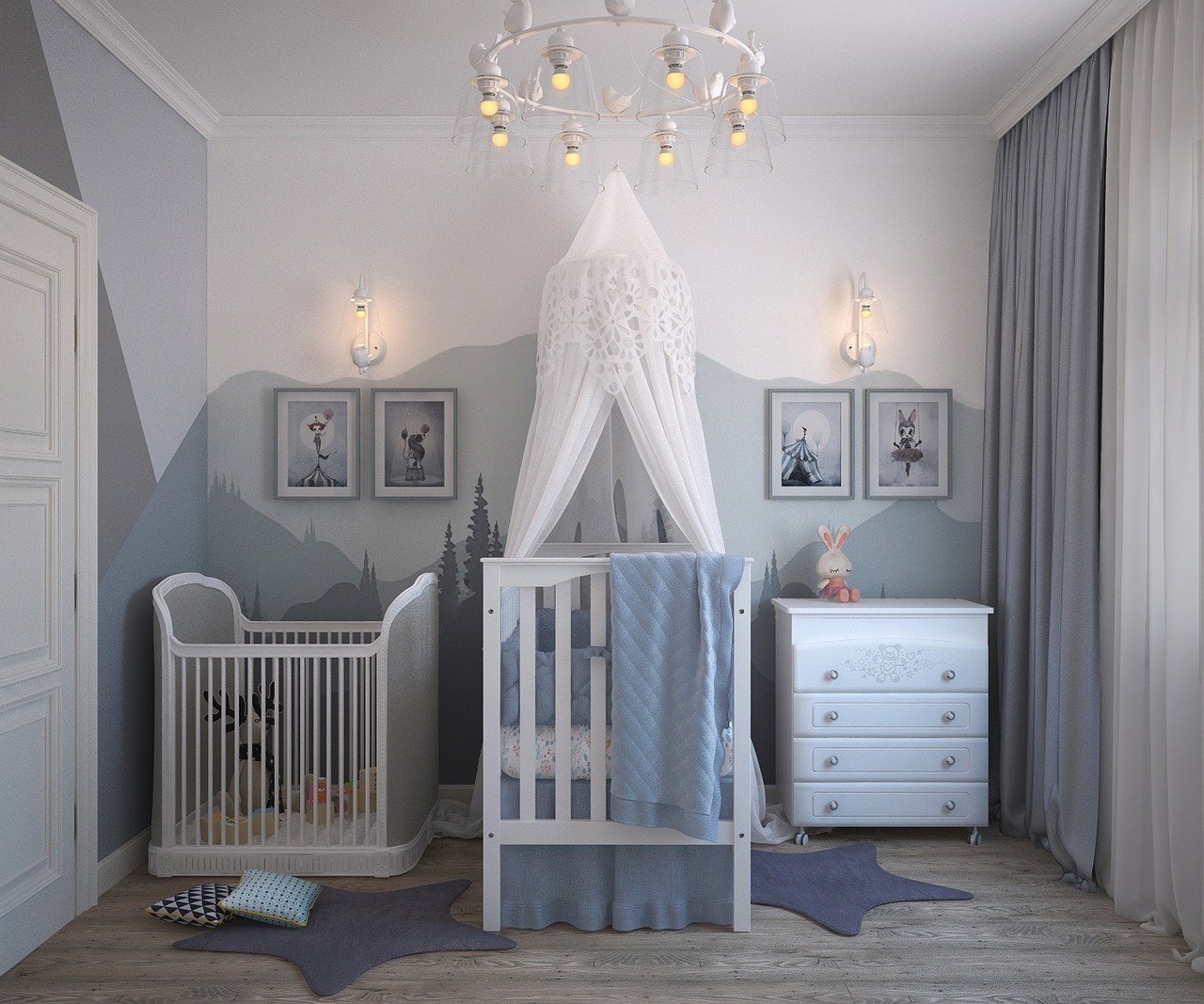
Quick answer: in a small nursery, keep the floor clear, use vertical storage, choose furniture that does more than one job and stick to a calm color palette. Prioritize a safe sleep space first, then add storage and decor in layers.
Start with the layout
Measure the room and sketch where the crib, changing area and feeding chair can go. Keep the crib away from windows, cords and heaters, and leave a clear path to it. Even a corner of your own bedroom can become a calm baby area.
Choose multi-purpose furniture
- A dresser with a changing pad on top replaces a changing table.
- A crib with a built-in drawer or space for storage bins underneath.
- A storage bench or ottoman that doubles as a seat.
- A convertible crib that grows with your child.
Go vertical
- Wall shelves for baskets and books, placed out of the crib’s reach.
- Hanging organizers on the back of the door or closet.
- A closet organizer with a double rod for small clothes.
Anchor any tall furniture and shelves to the wall.
Pick a color palette that opens the room
| Palette | Effect | Accent ideas |
|---|---|---|
| Soft white and cream | Bright, airy | Natural wood, woven baskets |
| Blush and sage | Calm, warm | Linen curtains, floral art |
| Light gray and gold | Modern, balanced | Brass details, a round mirror |
Use light wisely
Hang curtains close to the ceiling to make it look taller, add a dimmable lamp for night feeds, and use blackout curtains for naps. Mirrors placed away from the crib can make the room feel bigger.
Make a small feeding corner
A compact armchair, a small side table and a lamp are enough. Add a basket with burp cloths, water and a book.
Decor that fits a small room
- A single large piece of art in place of many small frames.
- A soft rug with a low pile, which is also gentle for later floor play.
- Wall decals, which are easy to remove.
- Keep the crib bare. Decorate walls and shelves, not the sleep space.
Keep it flexible
Babies grow quickly, so choose simple pieces that adapt, like neutral furniture and removable wall decor.
Small nursery checklist
- Layout sketched, crib away from windows and cords.
- Furniture that serves two purposes.
- Vertical storage, anchored to the wall.
- Light colors and layered lighting.
- A cozy feeding corner.
Layout examples for tiny rooms
| Room type | Layout idea |
|---|---|
| Small bedroom | Crib on the longest wall, dresser with a changing pad opposite, chair in the corner |
| Walk-in closet | Remove the door, add a shelf, and use the space as a small changing and storage area |
| Corner of your bedroom | Bassinet beside the bed, a slim dresser and a folding screen or curtain to divide the space |
| Shared room with a sibling | Use a room divider or a curtain, and use soft lighting so that each child has a personal area |
Storage ideas that save floor space
- Under-crib bins on wheels for spare bedding and larger sizes of clothes.
- Over-the-door shoe organizers for diapers, wipes and small items.
- Hanging closet shelves for folded clothes.
- Floating shelves for books, placed high and anchored.
- A narrow cart on wheels for the changing station, which can move out of the way.
Wall and floor ideas
- Paint or wallpaper one accent wall instead of the whole room.
- Wall decals or fabric art are easy to remove.
- A round or oval rug softens the room and makes it feel cozy.
- Choose washable rugs and fabrics.
Keep it calm
Too many colors or patterns can make a small room feel busy. Pick two main colors and one accent. Use natural textures, such as wood, cotton or woven baskets, to add warmth. Keep surfaces clear, and store extra items out of sight.
Safety in small spaces
- Keep the crib away from windows, curtains and blind cords, and away from shelves that could fall.
- Anchor dressers and shelves to the wall.
- Make sure that nothing hangs above the crib.
- Do not place a heater, humidifier or electrical device within reach.
A budget plan
| Priority | Items |
|---|---|
| First | Safe sleep space, blackout curtains, anchoring hardware |
| Second | Dresser or storage, feeding chair or cushion, lamp |
| Third | Rug, art, baskets and decor |
Buy second-hand for furniture where possible, and check safety. Use paint and textiles to give the space personality.
Grow-with-me ideas
Choose furniture that can change as your child grows, such as a convertible crib, a dresser that becomes a desk, or shelves that adjust. Keep the walls simple, so that you can change the theme without repainting.
Make a plan before you buy
Measure the room, the door and the windows, and note where outlets and radiators are. Draw a simple plan on paper, and test it by marking furniture sizes with tape on the floor. This helps you check that you can open doors, walk around and reach the crib comfortably.
Choosing a crib for small rooms
| Option | Good for |
|---|---|
| Mini crib or bassinet | The first months, in a tight space |
| Standard crib with a storage drawer | Long-term use with extra storage |
| Convertible crib | A bed that grows with your child |
| Play yard | A flexible, portable sleep space |
Whichever you choose, check that it meets current safety standards and follow the maker’s instructions.
Lighting and mood
- Use a dimmable lamp for night feeds.
- Choose warm bulbs for a cozy feel.
- Add a small night light, away from the crib.
- Hang lightweight curtains for daylight, with blackout lining for naps.
Decorating on a small budget
Paint is one of the best-value ways to change a room. Use low-odor paint, and finish well before the baby arrives. Frame a few favorite prints, or use fabric scraps to make a banner. Choose second-hand frames and baskets, and focus on a few meaningful items.
Sharing space with a baby
If the baby sleeps in your room, keep the space calm with a screen or curtain. Keep the baby’s items in one section, such as a single dresser or a set of bins. Over time, you can move the baby to their own room when you are ready.
Neutral small nursery ideas
A neutral palette keeps a small room calm and makes it feel larger. Cream, warm white, sand, soft gray and sage green work well together, and they suit any baby. Add interest with texture instead of bold color: a woven basket, a linen curtain, a knitted blanket or a wooden shelf. If you later want to change the look, swap a few accessories rather than repainting.
Frequently asked questions
Can a baby sleep in my room?
Yes. Health guidance recommends room-sharing in the early months, so a small nursery corner is a good fit.
How do I keep clutter down?
Use labeled bins, store off-season sizes elsewhere and only keep what you use now at hand.
What is the best color for a small nursery?
Light, soft tones tend to make rooms feel larger, but choose what you love.
Conclusion
A small nursery can feel beautiful and calm. Plan the layout, build in storage and keep the sleep space safe and simple.
Leave a Reply